
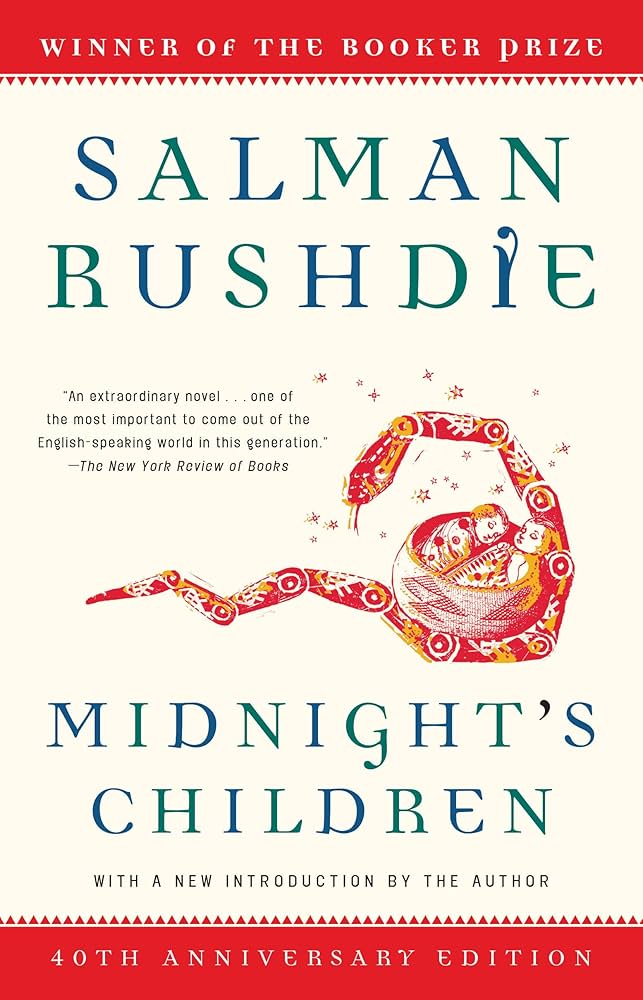
Novel by Salman Rushdie
Reactions: Fantastical, Epic, Literary Genius
This book is not for the easily distracted. In the introduction, Rushdie himself says he set out to write a novel that blends the epic nature of greats like Anna Karenina and Pride and Prejudice with the magical realism of One Hundred Years of Solitude. And he sure did.
The magical realism is what kept me reading all 530 pages. And it’s not a normal 530 pages. It meanders across four generations and hundreds of characters, but all the while seamlessly tying them together with the fantastic autobiography of the narrator. I’d often find myself re-reading entire pages to try to understand the significance of what happened as it was buried in the playfulness and metaphor of the magical realism that dances across the pages.
It’s also important to recognize that the narrator is magically and metaphorically tied to the birth of India. And as he suffers or succeeds throughout his life, so does India (and, by proxy, Pakistan and Bangladesh). I didn’t quite understand his “present day” ailment until near the end. Once I did, it really brought the last part of the book home for me.
I chose this book from the Modern Library’s Top 100 list (having read two dozen others on the list), specifically because it was one of the only magical realism novels to be included. I loved it but I also read it for the literary and historical experience. Do not choose this book lightly: It’s an epic and that requires commitment and dedication to the art form. However, it’s also so very rewarding all along the way.

 Aaron Likes
Leave a comment